NL East Arms Race: New York Mets
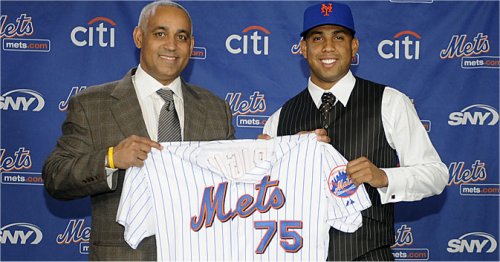
K-Rod_Mets.jpgThe moving and the shaking has not missed the National League East this hot stove season, with more than a few new faces joining East squads that are setting their sights on a trip to October. Atlanta brings a new look rotation into 2009, but their divisional rivals have made some big improvements as well. This installment of the “NL East Arms Race” delves into the pitching staff of the New York Mets.

Over the past three years, the Mets have been built to win, holding onto first place for large chunks of time before falling at the hands of the Phillies in the end. A near World Series trip in 2006 still fresh on their minds, the Mets have taken strides each off-season to bolster their squad. That trend continued this winter with a bullpen makeover.

When the Mets lost ninth inning man Billy Wagner to elbow surgery last season, they suffered through numerous late inning collapses and finished the year with 29 blown saves as a team. New closer Francisco Rodriguez comes off a record setting 62 saves last season for the Angels. Signing Rodriguez to a three-year deal was just step one of general manager Omar Minaya‘s plan to solidify the achilles heel of the 2008 Mets.

K-Rod will have help from another American League late inning star, J.J. Putz, who was acquired in a December trade with the Seattle Mariners. Putz will serve as the primary set-up man for manager Jerry Manuel. Lefty Pedro Feliciano and righty Duaner Sanchez will return to their roles in the pen this season and will be joined by right-hander Sean Green, who was also acquired in the Putz deal.

The Mets rotation will be the next place Minaya looks to fortify as Spring Training approaches. Johan Santana was spectacular in the second half of last season, but even his stellar work was not enough to lift the Mets above and beyond the September slide. The bullpen cost Santana a chance to win 20 games and likely take home his first Cy Young Award in the National League.

Minaya has already signed veteran right-hander Tim Redding to bolster the back of the rotation. Redding, who will be 31 when the seasons starts, revived his career while pitching for the Washington Nationals over the past two seasons. He tied a previous career-best with 10 wins and notched a career-high 182 innings in 33 starts in 2008. Still, Redding projects to be no more than a fourth or fifth starter in the Mets plans.

The Mets have turned their focus to bringing back lefty Oliver Perez, having lost out in the  Derek Lowe sweepstakes. Perez, 27, was brought over in a 2006 trade with the Pittsburgh Pirates and promptly re-established himself with a 15-win season in 2007. His electric stuff is often overshadowed by his lack of command and penchant for bases on balls.

Perez, 10-7 with a 4.22 ERA in 34 starts a year ago, lead the National League with 105 walks last season and set career-highs with 11 hit batsmen and nine wild pitches. New York extended a three-year $30 million offer to Perez and agent Scott Boras, but those terms are far short of the reported five-year $80 million deal that Boras is believed to be seeking for Perez’s services.

That figure is mind boggling for a pitcher who won less games in 2008 than Ubaldo Jimenez, Kyle Kendrick, Brian Moehler and Jason Marquis. Pitchers who matched Perez’s win total from a year ago include Redding, Jorge De la Rosa, Manny Parra, Jeff Suppan and Barry Zito. None of those names can exactly be looked upon as impact players, but Scott Boras has a way with words and dollar signs. Just ask Zito.

Mike Pelfrey is a young talent on the rise, but more on the level of a Jair Jurrjens of Atlanta. Neither pitcher has the experience that makes them a bona fide number two starter in their teams’ rotation. Going 13-11 with a 3.72 ERA and logging 200.2 innings in his first full season with New York, Pelfrey proved to be a key component when injuries sapped the rotation of Pedro Martinez and John Maine.

Speaking of Maine, his health will be absolutely vital the Mets hopes this season. In just 25 starts a year ago, Maine was 10-8 with 122 strikeouts in 140 innings before a strained rotator cuff put him on the shelf late in the year. Surgery to remove a bone spur in his throwing shoulder should have him back at 100 percent and ready to go this spring.

Prospect Jon Niese, 22, could also figure into New York’s rotation with a strong spring, perhaps grabbing the fifth starter’s spot. Niese has won 11 games in back-to-back seasons and is coming off a very solid campaign that earned him a September call-up. Last season, Niese was 11-8 with a 3.13 ERA in 29 starts, striking out 144 batters in 164 innings between Double-A Binghamton and Triple-A New Orleans.

If the Mets are unable to come to terms with Perez in a time frame that suits them, they could benefit from the standstill between the Yankees and Andy Pettitte and lure him away from the Bronx. The 36-year old Pettitte went 14-14 for the Yankees last season while logging 204 innings. A shorter term pact with Pettitte would not only save the Mets money, but also bring in a pitcher who carries 14 victories in 35 career post-season starts.

Till next time,

G-Mc
Mission accomplished, Braves sign Derek Lowe

ATLANTA — The Atlanta Braves and free agent right-hander Derek Lowe have agreed to a four-year deal worth $60 million on Tuesday, according to the Atlanta Journal Constitution.

Lowe, 35, is coming off a season in which he went 14-11 with a 3.24
ERA for the Los Angeles Dodgers in 34 starts. The deal gives Atlanta a
much sought after ace pitcher to anchor a new look rotation which
includes Javier Vazquez, recently signed Kenshin Kawakami and rookie stand-out Jair Jurrjens.

Just last Thursday, the Braves were believed to have suffered
through a disastrous offseason in which they were unable to come to
terms with free agents A.J. Burnett and Rafael Furcal, unable to complete a trade for Jake Peavy, and watched 21-year veteran John Smoltz depart in favor of joining the Boston Red Sox.

Atlanta will hold a press conference on Tuesday afternoon to
formally introduce Kawakami and will formally announce the Lowe signing
after the righty completes a routine physical on Wednesday.

Lowe, who has averaged 15 wins and 208 innings per season since
2002, brings durability and poise to an Atlanta rotation which was
marred by injury in 2008. In a 12-year career, Lowe is 126-107 with a
3.75 ERA and 85 saves.

Cooperstown gains two, Murphy still waiting

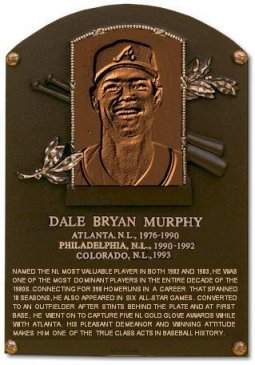
Murphy HOF SM.jpg
The Hall of Fame welcomed two new members on Monday as Rickey Henderson and Jim Rice
were voted in by the Baseball Writers of America. Both players
inclusion in Cooperstown may help shine a new light on the superstars
of the 1980s, including Atlanta Braves legend and all around good guy, Dale Murphy.

No decade has suffered more confusion as to  how the merits of its most
dominant players will ever earn them induction in the National Baseball
Hall of Fame, but there was no question about Henderson’s Hall of Fame
credentials. Henderson was named on 511 of the 539 votes cast, or 94.8
percent of the vote. His 1,406 career stolen bases is a record that
will likely never be approached, let alone broken.

Henderson was one of the biggest stars of the 1980s, one of baseball’s
most overlooked and under appreciated decades. His mantle was that of
the greatest lead-off hitter in baseball history, but when the topic
turns to great sluggers of the ’80s, Murphy is a name that usually
surfaces early and sticks around late in the conversation.

A quick look at Murphy’s numbers might make it easy to dismiss him in
the light of a first ballot shoo in such as Henderson. Coming up as a
catcher and moving to first base before  eventually landing in the
outfield, Murphy solidified his game there and became a true
shining stars in the sport, both on and off the field.

Murphy captured back-to-back National League MVP awards in 1982 and
1983, joining the 30-30 club in the second of those campaigns. He lead
the league in homers in both ’84 and ’85 and cobbled together a
consecutive games streak of 740 all the while.

His work at the plate was matched by his excellent play in center field, where he
captured five Gold Glove Awards. Throw in seven All-Star appearances,
including being the leading vote-getter in 1985, and four Silver
Slugger Awards and you start get an accurate representation of how good
Murphy was in his prime.

Detracting from Murphy’s Hall of Fame case is his precipitous decline
that began in 1988 and saw his career end due to chronic knee problems
after truncated 1992 and 1993 seasons. His career batting average of
just .265 would not be the lowest in the Hall, but is usually the first
place detractors start when building the case against his enshrinement.

The 1,748 times Murphy struck out ranked him seventh at the time of his
retirement and provides the second blow of a one two punch that is
likely enough to give any voter pause. Though he was unable to reach
400 homers, standing at 398, Murphy can likely thank the work stoppage
of 1981 for that shortcoming.

Noted sluggers of the ’80s, guys like Murphy, Rice, Andre Dawson and Dave Parker, who did not also reach the 3,000 hit plateau have found it harder to meet the admissions standards of the voters. Eddie Murray and Dave Winfield are two prime examples of sluggers who reached 3,000 hits to solidify their candidacy.

While some voters will take the performance of these players and place
it in the context of the era in which each man played, others have
likely had their power number standards forever altered by the
performance enhancing drug scandals of the past decade.

Rice caused voters to languish over the slugging achievements of his
first 12 seasons, ultimately giving him 412 votes for 76.4 percent on
his 15th and final time on the writers’ ballot. Players must be named
on 75 percent of the vote to gain entry. A .298 career hitter with 382
homers and 1,451 RBI over parts of 17-seasons with the Boston Red Sox,
Rice put up more than half a dozen MVP-caliber years and captured the
award in 1978.

The onslaught of 400, 500 and even 600 home run club members with
questions surrounding their accomplishments only serves to diminish the
power numbers attained by players like Rice, Murphy, Dawson and Parker
in the minds of many of the writers charged with the task of selecting
baseball’s best for enshrinement.

Much of the debate around these borderline Hall of Fame candidates is
that when placed against his peers, there is generally always one
player from their generation that sets the bar. You could make a case
that Mike Schmidt and his 548 home runs was the primordial power hitter of Murphy’s era.

Voter standards for comparison are made both statistically and by the
position, but no two writers utilize an identical standard. That leaves
a player’s accomplishments up for interpretation. This could be based on his era, the
teams he played for, and his mastery of the game against both his
opponents and statistical peers.

Putting aside his amazing consecutive game streak for a moment, Cal Ripken‘s
numbers make him one of the greatest slugging shortstops of all-time. However, those same numbers would not land Ripken a spot near the top of the best slugging
outfielders or first basemen in the game’s history. That does little to
change the fact that Ripken’s numbers, at any position, would still be
Hall worthy.

There is no set formula of achievements and milestones that creates a
Hall of Famer. Mythical statistics, such as 3,000 hits and 500 home
runs, remain the most readily identifiable resume points to identify a
player who has the numbers that define greatness. The latter of those
may change in the face of this past decade’s PED scandals. Just wait
until Rafael Palmiero is on the ballot.

With Murphy, Dawson and Parker joining the likes of Tim Raines, Don Mattingly, Alan Trammell
and others, it may be still another decade more before the Hall voters
en masse are truly able to appreciate some of the greatest position
players of 1980s. In the end, the Veterans Committee may be the ones
who hear the cries of baseball’s often overlooked stars of yesteryear.

Till next time,

G-Mc


Turning things around, Braves sign Kawakami

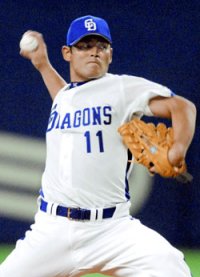
The off-season has not been what the Atlanta Braves had in mind when they entered the market with money to spend. With the fall-out of John Smoltz‘s departure fresh on their minds, Atlanta agreed to terms with one of their free-agent pitching targets on Saturday, signing Japanese right-hander Kenshin Kawakami to a three-year contract.

Financial terms have not yet been announced, as the deal is still pending a physical which will take place on Monday. During an 11-year career with the Chunichi Dragons of Japan’s Central League, Kawakami is 112-72 with a 3.22 ERA in 1642.1 innings.

Kawakami.jpg

Kawakami was 9-5 with a 2.30 ERA in 117.1 innings last season, missing some time with a back strain late in the year. Though he was part of a six-man rotation for the Dragons, most project Kawakami to fit into the middle of the Braves rotation, behind Javier Vazquez and Jair Jurrjens.

Some have compared Kawakami to Dodgers pitcher Hiroki Kuroda, who signed a 3-year $35 million deal with Los Angeles last winter, but his career ERA was nearly half a run better than Kuroda’s 3.69 mark. Kawakmi’s achievements include the 1998 Rookie of the Year award and the 2004 Sawamura Award, which is the Major League equivalent to the Cy Young Award. Kawakami hurled a no-hitter in 2002 against the Yomiuri Giants.

Signing Kawakami is the first of what Atlanta hopes will be a two-step process to take the bad taste out of the mouths of all involved with the “Winter Not to Remember.” The second, and more major move, could be the signing of veteran hurler Derek Lowe over the next few days.

Atlanta put on the full court press for Lowe this past week, meeting for more than three hours with the righty and his agent, Scott Boras. Reports had the New York Mets making a three-year $36 million offer last week, but Boras disputes that claim and has made it clear that those parameters will not get a deal done for Lowe.

Lowe is coming off a 14-11 season with a 3.24 34 starts. His 211 innings mark the fifth time in seven seasons that Lowe has surpassed the 200 inning plateau. His durability and his average of 15 wins per season since 2002 would fit the bill of the front of the rotation starter Atlanta was seeking this off-season. 

Smoltz opts for Plan “B”, as in Boston…

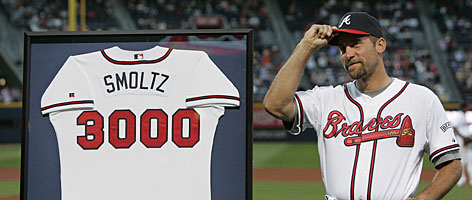
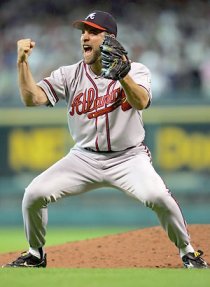
smoltz-3000.jpgAs he did so many times as an All-Star stopper, John Smoltz closed the door on Thursday. This time, however, it was on his career with the Atlanta Braves. In many ways, it signals the end of an era and has become a lightning rod for the frustrations experienced by the Braves this winter.

Unable to reach a trade for Jake Peavy, shunned by A.J. Burnett and forced to endure an embarrassing turn of events with Rafael Furcal, this off-season has been truly forgettable. The ire of Braves fans has been hard to miss, boiling over with the loss of Smoltz, a once unimaginable scenario. On Monday, fans from Red Sox Nation will see their newest acquisition introduced in a press conference. And Braves fans will see Smoltz don a new hat with a “B” rather than the classic script “A” he has worn since 1988.

Smoltz was limited to just six appearances in 2008 and could be 42 before he throws his first pitch for the Red Sox. Boston is spending $5.5 million to bring the winningest pitcher in post-season history into the fray for what will likely be another October run in Beantown. What’s more is that they do not expect him to take the mound until around June 1, giving him incentives that are essentially pro-rated so that he could easily earn up to another $5 million. This is a luxury spending for a man who could make a big impact.

Atlanta’s best offer of roughly $2-2.5 million with incentives could have reached $10 million according to CEO Terry McGuirk, who was “shocked” by Smoltz’s departure. Atlanta’s incentives included one rather large caveat of $5 million if Smoltz were to surpass 200 innings, but nothing for any other innings marker. In other words, the Braves were looking for Smoltz, remember at 42, to be the same pitcher he was at age 40 when he threw 205.2 innings in 2007. Even for Smoltz, that seems like a tall order coming off the shoulder surgery. Without the 200 innings logged, Atlanta’s offer would only match the guaranteed portion of his Boston contract at best.

That offer may have been too little too late, since Smoltz was hoping his early December throwing session would be all the proof Atlanta would need that his health was on track to expedite negotiations. That was a month ago. Atlanta made the offer they felt was appropriate for a player of Smoltz’s age and recent injury history. Despite nearly two months to get Smoltz under contract, the two sides never approached a middle ground on the terms.

Smoltz, who was not planning to comment on the deal until it was complete, issued a statement on Thursday afternoon through agents at Career Sports & Entertainment to eliminate the possibility that anything resembling the disastrous wake of the Furcal negotiations could happen again:

“There were large discrepancies between the offer from the Braves and offers from other teams,” said Smoltz in the statement. “I have always loved the city of Atlanta, and it will always be my
home. I will cherish my 21 years with
Bobby Cox and all my Braves teammates. I continue to wish the Atlanta
Braves nothing but success in the future.”

Smoltz_closer_sm.jpgHis loss leaves a void that will be felt from the clubhouse, to the stands of Turner Field, to living rooms of Braves fans across the country and in the community he leaves behind. Smoltz has soldiered on for years in Atlanta. taking less money at times, moving to the bullpen, moving back to the rotation and doing everything and seemingly anything else that was asked of him over a 21-year career.

In the end, General Manager Frank Wren said it came down to the Braves not wanting to rest their hopes on an aging star pitcher with a surgically repaired right shoulder. Even a phone call from Cox could not change Smoltz’s mind. Boston showed an earnest interest and got their man with a better deal than Atlanta could offer. 

This is a public relations nightmare for a club that is struggling to re-assert itself in the race for the National League East next season. Atlanta has built much of its marketing over the past decade and a half in part or almost completely around Smoltz, the final player who remained from the Worst-to-First ’91 squad.

They have also given Smoltz all the fodder he will need to use as motivation to prove he can still perform at a very high level. Pitching in the American League East in a heightened rivalry with the new look New York Yankees will provide opportunities for Smoltz to pitch in the big game environment, where he has thrived over his career. Boston fans should be licking their chops to have a pitcher with Smoltz resume on board in a pennant race.

While there may be no doubt about Smoltz being enshrined in Cooperstown wearing a Braves hat, it will certainly be odd to see him pitching for the Red Sox. Meanwhile, the Braves certainly have their work cut out for them in 2009.

Till next time,

G-Mc

Reports have Smoltz heading to Boston

Veteran right-hander John Smoltz appears close to a deal with the Boston Red Sox according to MLB.com’s Mark Bowman. An announcement could come as early as Thursday.

The
deal calls for a $5.5 million base salary with incentives that could
push the deal to $10 million based on performance, a Major League
source close to the negotiations told Bowman. Boston would like to use
Smoltz as a starter.

Smoltz, who will be 42 in May, has spent
his entire 21-year career with Atlanta after being acquired in a
mid-season trade with the Detroit Tigers in 1987. He was the last
player remaining from the Braves original worst-to-first season of 1991.

Boston would add Smoltz to an already strong rotation that includes Josh Beckett, Daisuke Matsuzaka, Jon Lester, Tim Wakefield and the recently signed Brad Penny.

Last
season, Smoltz went 3-2 in just six appearances before being shut down
with reconstructive shoulder surgery. Braves manager Bobby Cox spoke highly of Smolz’s progress in rehab while at the Winter Meetings in Las Vegas.

“I’ve never seen John so fired up about something in my life,” said Cox. “He loves
challenges, and he’s got a big one ahead of him. But what I saw for the
very first time out off the mound was incredibly good.”

Smoltz
had just completed his first throwing session off the mound in early
December in which he utilized all of his pitches, including his
assortment of breaking balls. Atlanta was hoping to gauge his rehab
further before making a formal contract offer.

During his time
in Atlanta, Smoltz became the first pitcher in history to win more than
200 games while also saving more than 150. He became just the 16th
pitcher in history to surpass the 3,000 career strike out plateau
against the Washington Nationals last April. An eight time NL All-Star,
Smoltz captured the Cy Young Award in 1996.

Losing Smoltz is the
latest in a series of disappointments for the Braves this winter,
having already lost out on the bidding for free-agent starter A.J. Burnett and infielder Rafael Furcal. Atlanta general manager Frank Wren also publicly pulled out of trade negotiations with the San Diego Padres involving 2007 Cy Young winner Jake Peavy.

Wren has stated on multiple occasions this off-season that he was monitoring the progress of both Smoltz and 300 game winner Tom Glavine, in hopes of bringing them back in 2009.

How Lowe can we go?

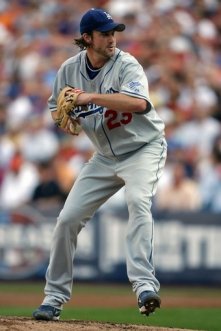
Lowe_LA.jpgThe really big contracts have already gone out this winter, but all the major players in the free agent pitching market are not yet off the table. Secondary pursuits should start to fill the empty seats for the clubs that missed out on the likes of CC Sabathia, and in the Braves case, A.J. Burnett.

Look, I’m just excited to see a pitcher who doesn’t go by two initials attracted some attention on the market. It was starting to get a little weird. Although, I bet Derek Christopher Lowe would be more than happy to go by “D.C.” if he knew it would land him the rumored $16 million per year over four seasons that he desires. Were it not for the fact that he will turn 36-years old in June, his track record and post-season experience would easily net him a bigger deal than Seattle handed Carlos Silva last winter (4-years and $48 million). 

If the Braves were willing to go the distance in the Burnett bidding, only to fall short, then it would seem the money would still be available to put toward bringing Lowe to Atlanta. Injury was the question with Burnett, but age is the major point of contention for handing a multi-year deal to Lowe. His durability is not in question, however. Over the past seven seasons, Lowe has won 106 games and averaged 208 innings. Adding his veteran presence to that of Javier Vazquez and perhaps John Smoltz would give the Braves the experience factor. Throw in talented young right-handers, Jair Jurrjens and Tommy Hanson, and you could have the makings of a strong rotation. Tim Hudson will likely miss the entire 2009 season as he recovers from his Tommy John surgery.

Atlanta’s interest in Lowe has been tepid at best thus far. It does not rule out their involvement altogether. However, to get into the bidding for Lowe, Frank Wren would have to approach the Mets initial offer of 3-year and $36 million that Lowe has already rejected. Also working against bringing Lowe to Atlanta is his agent, Scott Boras. The Braves history of signing and even retaining Boras clients is not exactly inspiring. It is doubtful that Boras and his team view Atlanta as anything more than leverage at this point, useful for driving up the price the New York Mets or Boston Red Sox would be willing to pay. Those two clubs also fit a certain criteria that every free agent is looking for, the ability to win now.

As most GM’s do, Wren has other irons in the fire, including Japanese hurler Kenshin Kawakami. There are reports that he has narrowed his choices to the Baltimore Orioles, St. Louis Cardinals and Minnesota Twins. The AJC’s David O’Brien reports to the contrary after speaking with Kawakami’s agent this week. Perhaps Atlanta will remain in the mix. Kawakami will be 34-years old midway through next season, making him a few months younger than Hiroki Kuroda, who was signed to a 3-year $35 million deal by the Dodgers last winter. That price tag brings us back full circle to Lowe.

Though he may not be a clear ace, Lowe would fill Atlanta’s off-season goal of adding two quality veteran starters. Lowe is not Jake Peavy, but that ship sailed long ago.

Till next time,

G-Mc

Escape from L.A.?

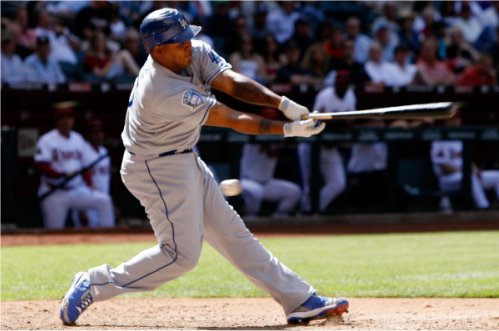
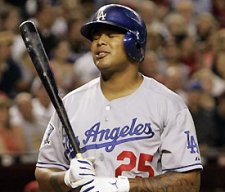
Andruw_K.jpgThis Hollywood masterpiece doesn’t involve Kurt Russell reprising the role of Snake Plisskin, though some may theorize that Andruw Jones
don the eyepatch in an attempt to reverse his recent fortunes. Before
the new year could make it through its opening day, speculation has the
Los Angeles Dodgers trying to buy out and/or unload Jones and his
enormous contract.

It was just a week ago that we were watching everyone squash a rumored trade to the New York Mets for Luis Castillo.
Now reports are stating that Jones and the Dodgers have reached an
agreement that would defer the remaining 22.1 million owed over the
next several years. The club has agreed to trade or release Jones as
well.

Top priority in Dodgersland has been given to bringing back Manny Ramirez.
And why not? Ramirez seems to be hitting better with age. Getting the
slugger who reversed the team’s fortunes following his trade deadline
acquisition will no doubt take a large sum of the green stuff – and I’m
not talking new year’s collards.

Dumping Jones money, or at least breaking it into several years worth
of small payments rather than a lump sum should allow Los Angeles to
get to the business of getting to the table with Ramirez.I don’t have
to tell the average baseball fan that if the bitter long-term rival San
Francisco Giants are earnest in their decision to pursue Ramirez, then
it behooves Colletti to step things up and seal the deal.

Andruw_08_Disgust.jpgFollowing
the bouncing ball would point to the fairly obvious fact that L.A.
could save some money by unloading Jones to another team, but that
won’t be easy after he followed a .222-26-94 season with his horrendous
.158-3-14 campaign that was highlighed by injury for the first time in
a 13-year career. More alarming and dissuading for a potential buyer
would be the 76 strikeouts in 209 at-bats. Jones also missed out on
winning his 11th Gold Glove Award as well.

It would probably
be silly to go from those stat-lines to suggest that the Braves would
be an excellent place for Andruw to find employment if indeed he is
released from his duties out West. What could playing in Atlanta do for
Andruw now that it wasn’t doing for him in 2007 – his original
career-worst season?

The Dodgers have solved what became a rather expensive dilemma with
Andruw. No other team is going to be interested in taking on any
portion of his salary unless or until he proves he can be productive
again. You can probably safely assume that any interested club will
allow the Dodger to release and assume the majority of the deal and
then sign him for the Major League minimum.

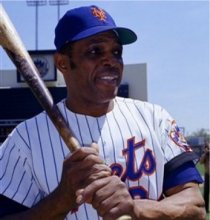
mays_mets_sm.jpgHomecoming stories haven’t been a source of happy endings in Atlanta as of late – Tom Glavine last season for example. But more to the point of once great center fielders in decline, take Willie Mays
in the Mets years for example. Anyone who saw Mays falling down in the
outfield and struggling to run the bases in his final years probably
sees the similarities between the two. What Jones may is the
opportunity to get his career back on track… something that Mays was
not allowed to do because of age and mileage. It is doubtful this road
to redemption would lead back to Atlanta – but I wouldn’t say
impossible.

At 32-years old this April, Jones should still be
in the prime years of his career. The opposite has shown the past two
seasons. Strikeouts have soared while his power numbers have hit the
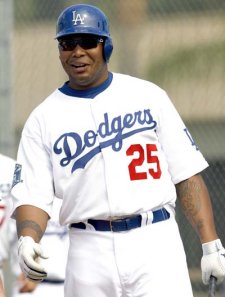
skids. Another thing that soared to new heights was Jones’ weight last spring when he reported to his first Dodger camp. The fans definitely noticed. See for yourself.

Andruw_spring.jpgIt got worse from there for Andruw, who was soon dubbed “tubbo” by the L.A. Times’ T.J. Simers.
He was the clever reporter who got Andruw to step on the scales to
register at 248 pounds. Yikes. Either way, Andruw’s usual relaxed
assuredness translated into a cavalier attitude in his new
surroundings. It was his complete lack of production made him anything
but a fan favorite. By the end of April, the smile that Braves fans
know as a Jones trademark could bring the blood of any Dodger fan to a
steady boil. Off-speed pitches became kryptonite and knee surgery
slowed the season to a crawl. Fast forward to September and the boys in
blue were making their playoff run without Jones, who essentially sent
himself home after a third DL stint.

Now Jones is down in
Aguilas, trying to get his entire career back on track this winter.
Various reports have stated that he is “looking forward” to his next
time out on the free agent market, while still others state that he has
slimmed down. Whatever the case may be, hitting .188 in half a dozen
games isn’t exactly lighting the world on fire.

To make
matters more tragic, I’ll suggest you spend some time on Youtube and do
a quick search for “Andruw Jones.” If you don’t find a Dodger fan-made
hate video within your first page of results, then you just aren’t
paying attention. Here’s one. And here’s another. Same game, but you get the idea.

If it was a knee injury that sapped his numbers last season, then Jones
will have to get things back on track and show the baseball world that
the reports of his demise have been greatly exaggerated.

Till next time,

G-Mc

Goodbye 2008, you will not be missed…

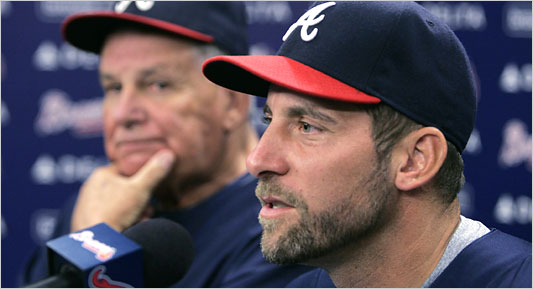
Smoltz_injury_conference.jpg
Based
on the kind of fun and excitement generated by press conferences like
the one above, there was no way that I could (in good conscience) call
yet another to wish this calender year a fond farewell. But, believe
me, I wanted to. This visual aptly sums up the theme of this season in
Atlanta Braves history – perhaps more swiftly and soundly than the glut
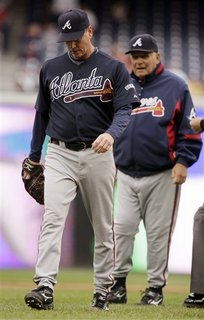
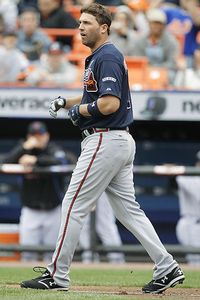
of words to follow. A simple theory (if you will note the pictures) would be to blame all of this on those dreaded new blue alternate road jerseys. Suffice it to say, good riddance 2008!

Glavine_April_injury.jpgThere was a palpable excitement when the Braves reported to Spring Training this season. The return of Tom Glavine gave Atlanta a rotation that boasted four former 20-game winners. Unfortunately, Glavine, John Smoltz, Tim Hudson and Mike Hampton were unable to complete one full turn through the rotation at any point during the season.

Glavine
and Smoltz could not provide the vintage Cy Young magic of their pasts,
both falling to injury in April and combining for just 18 starts
between them. When Hampton tore a pectoral muscle just prior to his
first start of the season, Atlanta found themselves operating without
three of their five regular starters. Hudson was not far behind. Those
losses would prove to be crippling to Atlanta’s play-off hopes.

The
rotation could have been viewed as a complete blackhole by the end of
July, were it not for the sparkling work of rookie right-hander Jair Jurrjens.
Acquired in a trade from the Detroit Tigers, Jurrjens finished his
first full season in the majors 13-10 with 3.68 ERA in 31 starts. Not
bad for a guy who was battling for the fifth spot in the rotation in
Grapefruit League play.

Hampton would eventually make it back,
returning in late July – just as Hudson’s season was being cut short by
Tommy John surgery. Settling in after a few rocky outings, Hampton
contributed solid work and quality innings over the season’s final
months. It was the first work for the left-hander since August of 2005.

None of the replacement hurlers were able to match the production of those they were replacing. Jo-Jo Reyes and Charle Morton both showed flashes of brilliance and increased lapses in command. Chuck James
suffered a shoulder injury and was shelled in seven starts before a
demotion to Richmond. Atlanta did see some quality work from Jorge Campillo, who gave the club 25 much needed starts and proved to be the only capable fill-in.

The Braves bullpen performed admirably in the face of overuse and injuries. Projected closer Rafael Soriano was a non-factor for much of the season with a mysterious elbow ailment. A success story in 2007, Peter Moylan was out by mid-April with Tommy John surgery of his own. Mike Gonzalez returned midway through the season to assume the closer’s role and re-established himself as a late inning force. Will Ohman, Jeff Bennett and Blaine Boyer provided the majority of the middle relief work, all making more than 70 appearances.

When it came to the offensive side, it would have been a good pre-season indicator to know that Chipper Jones
was going to win the NL batting title. As Chipper goes, so goes the
Braves line-up. However, poor indicators would have been to reveal that
Jeff Francoeur would regress to the point of being banished to the minor leagues and Mark Teixeira would be traded away prior to the July deadline.

Francoeur_struggles.jpgFrancoeur’s
struggles were just a microcosm of the Braves season. His average
dropped 54 points to .239, home runs fell from 19 down to 11 and RBI
plummeted from 105 to 71 as compared to 2007’s numbers. The quick
decline have put contract extension talks on hold and put Francoeur’s
young star status in question.

Lost at the plate, Francoeur was
sent to Double A Mississippi in hopes it would jump start his bat.
Problems arose from the demotion, as Francoeur voiced his disapproval
to several media outlets in the days that followed. It made little
matter, because the trip down only lasted for three games. Francoeur
was back to his regularly scheduled struggles.

With Teixeira
traded to the Angels and Francoeur trying to find himself, the Braves
lineup hinged on the health of Jones and the production of catcher Brian McCann, who earned his third consecutive All-Star appearance.

McCann
batted .301 with 42 doubles and a club-leading 23 homers and 87 RBI.
His strong work may have been one of the only factors that kept the
Braves line-up from coming apart at the seams. I would rattle off a few
more statistical accomplishments of other members of the supporting
cast, but Jones and McCann fill the star character roles nicely for this end-of-year
exercise.

Pressing through a variety of injuries for the fifth season in a row,
Jones average climbed for the fifth campaign as well. Jones grabbed the
batting crown he had just missed in 2007, hitting .364 and belted his
400th homer to boot. That wasn’t the only time the number 400 and Jones
would be mentioned in the same sentence last season. Flirting with a
.400 average through most of June was hardly what most teams expect
from their 36-year old third baseman, but it seems Jones is simply
getting better with age.

Though the season was a 72-90
disaster, a record which was a reversal of what many predicted the
Braves to finish with at worst, there was hope that resonated through
the off-season. General manager Frank Wren came into the winter
with more than $40 million to work with in re-tuning the
rotation and adding a power-hitting left fielder.

Trade talks for Jake Peavy fizzled, as did subsequent attempts to sign free-agent starter A.J. Burnett. Despite this, Wren was able to strike a deal with the White Sox to bring middle of the rotation stalwart, Javier Vazquez, into the fray. His track record of durability was something Atlanta was without in 2008.

Many
have deemed the off-season a complete disappointment, with no bigger
exclamation point than that of the negotiations that turned into a big
game of Deal or No Deal with Rafael Furcal. What ever
happened, intent to sign or not, the Braves came up short in yet
another off-season pursuit. The pains of those dealings may carry on
for years to come, as the Braves have vowed to never do business with
the Wasserman Media Group again.

Now
that 2008 has mercifully come to a close, there is reason to hope that
the next two months will see Wren make improvements to the club for
2009. It may not be a year of contention and World Series hopes, but
with top prospects remaining in the system rather than heading to San
Diego, the Braves could return to their play-off ways by resuming the
tradition of cranking out young talent and promptly supplementing them
with the right veterans.

Here’s to 2009!

Till then,

G-Mc

Hey Fookie, don’t forget to RSVP…

If you thought the Jake Peavy saga was enough to sour the Atlanta off-season… And if you thought it was frustrating when A.J. Burnett chose the Yankees over the Braves… then you must have loved the drama that unfolded when the Braves were scorned in their pursuit of free-agent shortstop Rafael Furcal.

Monday morning, it was the Oakland Athletics running out in front of the pack with a four-year offer for Fucal’s services. There was a mystery team in the running, with the Kansas City Royals, Toronto Blue Jays and Los Angeles Dodgers all believed to be interested to varying degrees. That msystery team, as we now know, turned out to be the Atlanta Braves, who offered Furcal a three-year deal worth a reported $30 million and included a vesting option for a fourth season.

Everything seemed to be beautiful for a fleeting couple of hours if you’re into the homecoming story of Atlanta’s not-so-long-lost lead-off man. Frank Wren and the Braves front office believed a deal was verbally agreed to and went as far as to schedule a flight and physical for Wednesday. As reports trickled out, it turned out to be news to Dodgers GM Ned Colletti, who stated that his club was still in negotiations to retain Furcal. That is where we come off the tracks.

Furcal_error.jpgThis story has twisted and turned and finally landed in the completely bizarre. Furcal’s Atlanta-based agent, Paul Kinzer, managed to thoroughly upset the apple-cart as it comes to the Braves front office. Atlanta believes that Kinzer took a signed term sheet (a binding agreement that would have put into motion a full contract following the physical) and shopped it openly to the Dodgers. Is it any coincidence that the Dodgers jumped from luke-warm interest (having made it clear that a 2-year deal was all they were interested in) to making a 3-year deal with a fourth year vesting option for… $30 million?


That raised a few eyebrows and more than a few red flags in my book. The fact that the Braves say they were lead to believe that they had an verbal agreement with Kinzer is hard to comprehend. How could they think they had a deal? How do you misunderstand a player agreeing to a deal in principle? I still don’t know how each side can state so fervently that they are in the right. Somebody is lying here folks. And I’m not even going to get into the debate regarding a position switch that may have been a deciding factor working against the Braves. 

Personally, I don’t mind Furcal returning to the Dodgers. His major back surgery is not something that would lead me to believe he is fully recovered after just one week in late September and a handful of post-season games. Back injuries are tricky, and the Braves may have dodged a bullet (much-pun intended) by allowing the Dodgers to step up and “steal” Furcal away for a multi-year deal.

Wren and Braves President John Schuerholz have gone on the record as calling the moves made by Furcal’s agents “dispicable” and have stated they will never do business with the Wasserman Media Group again. Who knows if cooler heads will eventually prevail, but this thing has turned into a full scale fued.

The Braves have work to do, most notably, they need to acquire a front of the rotation starter and one more hitter to solidifty the rotation and the line-up. The free-agent pool offers a few options but it seems logical that one of these needs will be filled by a trade. Could it possibly be Jake Peavy after all this time?

Things are slow in Bravesland, but there’s still time on the clock for Wren to make it happen.

Till next time,

G-Mc